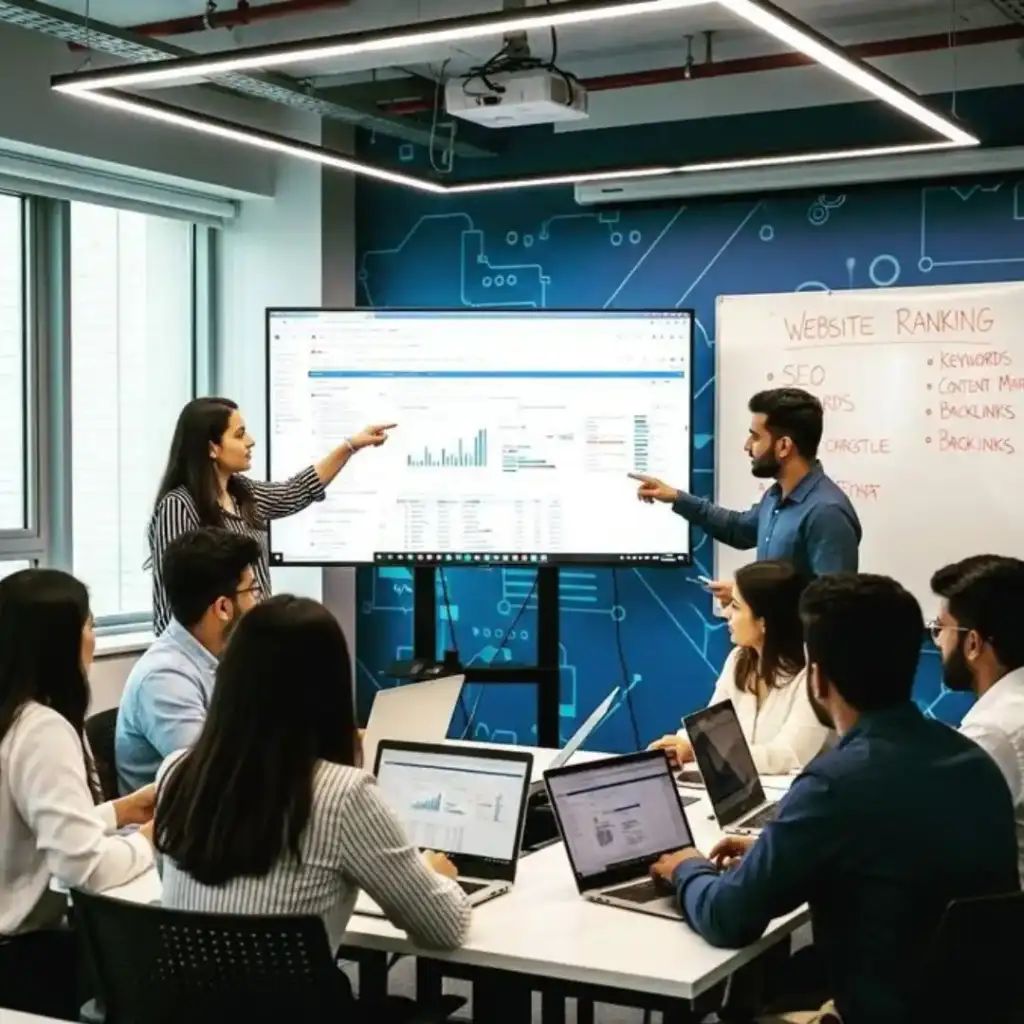
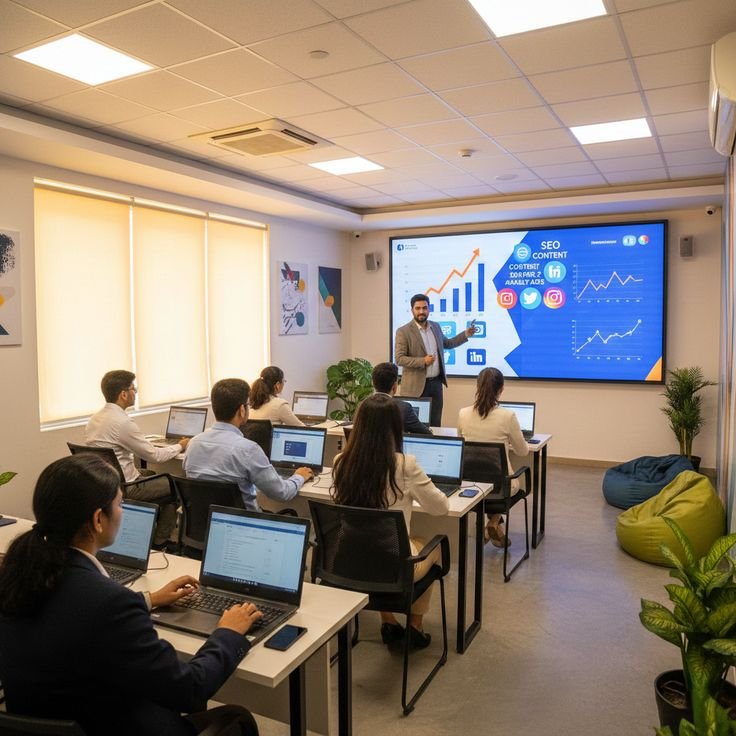
Walk into a progressive school in Noida today, and you’ll notice a clear shift from traditional chalkboards to dynamic digital learning spaces. Modern classrooms now feature bright, responsive interactive panels where teachers can write, explain concepts, display videos, explore 3D content, conduct quizzes, and engage students in real time. These Digital Classroom Solutions are helping schools create more interactive lessons, smarter teaching workflows, and technology-driven learning experiences.

For school administrators considering smart classroom display solutions, 2026 is becoming a decisive year. An interactive panel is no longer simply an add-on for a select classroom; it is increasingly part of a broader institutional technology strategy involving budget planning, curriculum requirements, CBSE/ICSE or state-board considerations, teacher training, infrastructure, after-sales support, and long-term maintenance.

A successful smart classroom setup is about more than installing a digital screen. Schools need to assess display quality, touch performance, software capabilities, connectivity, security, ease of use, warranty, technical support, and scalability. With AI-enabled features becoming increasingly common, administrators also need to understand which technologies genuinely improve teaching rather than simply adding unnecessary complexity.

This guide explores what a modern smart classroom in Noida should include, how AI-powered interactive panels are influencing digital education, and the key factors school decision-makers should evaluate before investing in a large-scale classroom technology upgrade.

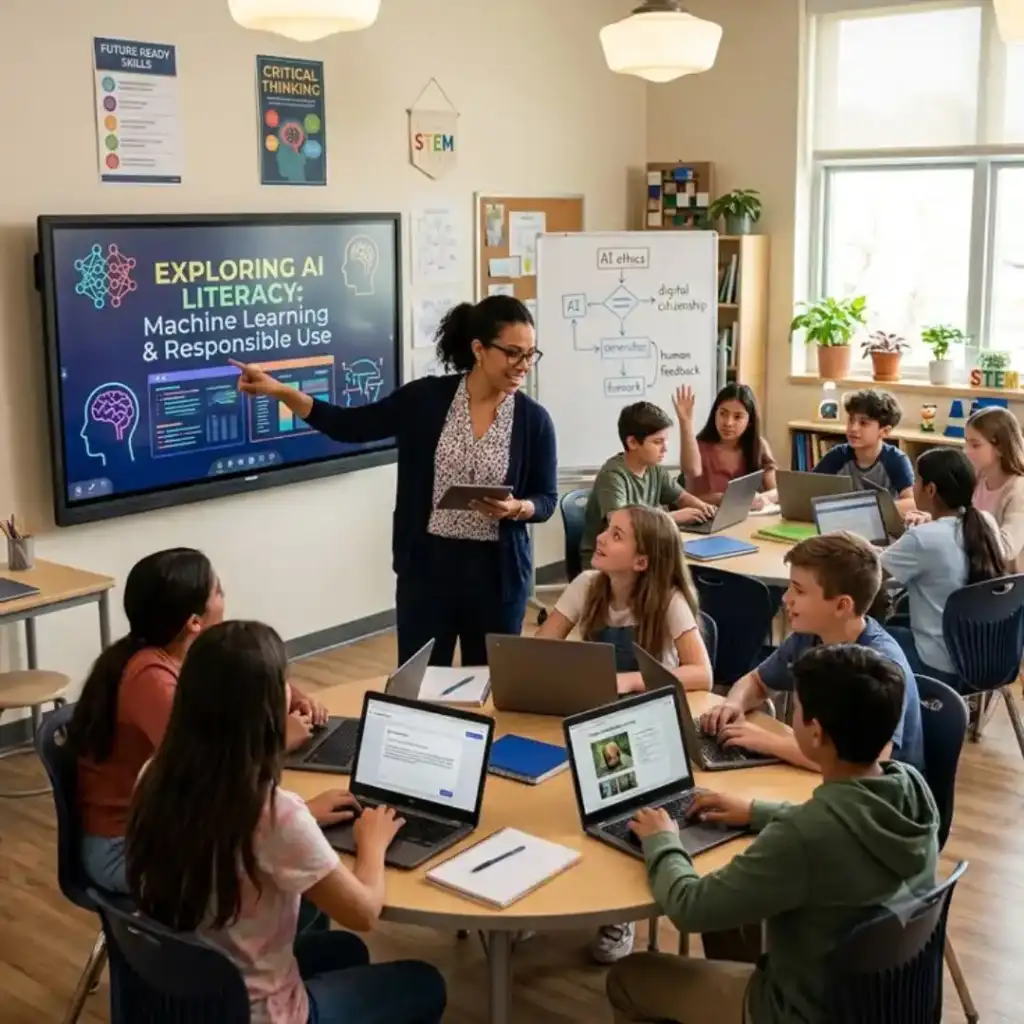
Why Noida Schools Are Moving Fast on Digital Classrooms

Smart Classroom Display Solutions in Noida
Smart Classroom Setup
Smart Classroom
Digital Classroom Solutions in Noida

Choosing the right Digital Classroom Solutions in Noida means going beyond a simple panel-on-the-wall upgrade — it’s an institutional decision that shapes teaching quality for years. A genuine smart classroom setup combines 20-point multi-touch interactive flat panels, AI-powered features like handwriting-to-text and auto-generated quizzes, and supporting infrastructure such as digital podiums and video conferencing tools.


For school administrators in Noida, the smartest rollouts start with a 2-3 classroom pilot, prioritize vendors offering BIS certification and a 5-year on-site warranty, and scale campus-wide only once teachers are trained and engagement is measurable. Done right, Digital Classroom Solutions in Noida don’t just modernize a classroom — they improve student outcomes while cutting long-term maintenance headaches for the school.

Noida’s education landscape — from established CBSE schools in Sector 44 to newer institutions along the Greater Noida Expressway — is under real pressure to modernize. A few forces are driving this shift simultaneously:

  • Parental expectation. Parents researching admissions increasingly ask about “smart classes” as a baseline feature, not a premium one.
  • Board and curriculum alignment. Boards are steadily pushing digital literacy and multimedia-based teaching into the curriculum itself.
  • Teacher retention and ease of use. A well-implemented digital classroom solutions in Noida rollout reduces prep time for teachers and makes lesson delivery genuinely easier, not more complicated.
  • Post-pandemic hybrid readiness. Schools want infrastructure that can support in-person teaching today and hybrid/remote sessions instantly if ever needed again.

The result is that “smart classroom” has moved from a marketing line on a school’s brochure to a real infrastructure decision that affects daily teaching quality.

What Does a Genuine Smart Classroom Setup Actually Include?

It’s easy to assume a smart classroom is just “a TV on the wall with a stylus.” A properly designed smart classroom setup is really a stack of connected components:

1. Interactive Flat Panels (the core display)

This is the centerpiece — a large-format, multi-touch panel replacing the traditional whiteboard and projector combination. Look for:

  • 20-point (or higher) multi-touch for group interaction, not just single-teacher use
  • 4K UHD, anti-glare screens for long visibility even in daylight-lit classrooms
  • Zero-gap bonding technology, which reduces glare and improves touch accuracy
  • Built-in Windows OS or Android integration for direct access to teaching software

ALVision’s Interactive Flat Panels are purpose-built around exactly this spec sheet — 20-point multi-touch, Windows OS integration, wireless screen sharing, and annotation tools designed specifically for classroom use.

2. AI Smart Classroom Technology

This is where 2026’s rollout differs meaningfully from setups installed five years ago. AI smart classroom technology now commonly includes:

  • Real-time handwriting-to-text conversion for faster note capture
  • Auto-generated quizzes and assessments based on lesson content
  • Voice-to-text transcription for lecture accessibility
  • Smart content recommendations aligned to the day’s syllabus

3. Supporting Infrastructure

A single panel doesn’t make a smart school — the surrounding ecosystem matters just as much:

  • Digital Podiums for teachers who prefer standing presentation delivery with integrated audio and display controls, available through ALVision’s Digital Podium range
  • Video Conferencing Solutions for hybrid classes, guest lectures, or inter-school sessions, covered under Video Conferencing Solutions
  • Digital Signage across corridors and notice areas for announcements, timetables, and event promotion, via Digital Signage Solutions
  • Information Kiosks at school entrances for visitor management and wayfinding, available through Digital Information Kiosk

Interactive Whiteboard for Schools: Why the Old Model Is Fading Out

Traditional whiteboards and even first-generation interactive whiteboards (the kind requiring a separate projector) are steadily being phased out across Noida’s private schools. The reasons administrators cite most often:

  • Projector bulbs and calibration issues create recurring maintenance costs and classroom downtime
  • Poor visibility in daylight-facing classrooms, especially in the afternoon batches
  • Limited interactivity — most legacy systems support only single-touch input, which doesn’t match how group-based, collaborative teaching actually works today

A modern interactive whiteboard for schools — built as an all-in-one flat panel rather than a projector-and-board combination — solves all three problems at once, while also cutting long-term maintenance overhead since there are fewer moving parts (no bulbs, no separate projector alignment).

EdTech Display Solutions: Choosing the Right Vendor as a School Administrator

For school administrators, the vendor decision is arguably more important than the spec sheet itself, since EdTech display solutions typically involve a 5+ year usage lifecycle, ongoing maintenance, and eventual scaling to more classrooms. Before signing off on a vendor, it’s worth checking:

  1. Manufacturing origin and certification — Is the product BIS certified, ISO 9001:2015 compliant, and genuinely Make in India, or just assembled locally from imported components?
  2. Warranty and after-sales support — A 5-year on-site warranty (standard with ALVision’s panels) matters far more once the fifth or sixth classroom is running the same hardware.
  3. Installation and training support — Does the vendor handle site survey, mounting, network setup, and teacher onboarding, or just drop off boxes?
  4. Scalability — Can the same vendor support a rollout from 2 classrooms this year to the entire school next year, without inconsistent hardware generations?
  5. Ongoing maintenance capacity — Pan-India, 24/7 support matters especially for schools outside the immediate NCR core.

This is where ALVision’s positioning becomes particularly relevant for institutional buyers. As one of India’s OEM/ODM manufacturers with an in-house R&D and engineering team, Alvision Digital designs and manufactures its own Interactive Flat Panels rather than white-labelling third-party imports — meaning consistent specs, quality control, and support across every classroom you scale to. Their Smart Classroom Solutions page is built specifically around this institutional buyer journey — from single-classroom pilots to full-campus digital transformation.

A Practical Rollout Plan for Schools Considering the Switch

If your institution is evaluating digital classroom solutions Noida vendors for the first time, a phased rollout tends to work better than a single big-bang purchase:

  1. Pilot in 2-3 classrooms — Typically senior secondary sections first, where digital content adoption is easiest to measure.
  2. Train teachers before full deployment — Even the best hardware underperforms if teachers aren’t comfortable with annotation tools and content libraries.
  3. Measure engagement, not just attendance — Track how lesson delivery time changes and how students respond to interactive assessments.
  4. Scale campus-wide with a single vendor — Consistency in hardware, software, and support contracts avoids the maintenance headaches of mixing multiple brands across a campus.
  5. Review AMC (Annual Maintenance Contract) terms carefully — This is often the most overlooked line item in a school’s technology budget, and the one that determines whether your panels are still running smoothly in year four.

See It Before You Decide

Reading a spec sheet only tells half the story — most school administrators make faster, more confident decisions once they’ve seen how a similar institution’s rollout actually looks in practice. View Our Projects to see how ALVision has approached classroom and institutional deployments, and get a clearer sense of what a rollout for your own school could look like.

Frequently Asked Questions

1. What is a smart classroom, exactly?

A smart classroom replaces the traditional blackboard and projector setup with an interactive flat panel — a large touchscreen display that lets teachers write, show videos, and run digital lessons all from one device. It’s designed to make lessons more visual and more interactive for students, without needing separate hardware for each function.

Costs depend on panel size (usually 65″, 75″, or 86″), the number of classrooms, and whether you’re adding extras like podiums or video conferencing. Most schools start with a pilot in 2-3 classrooms before scaling campus-wide, which also makes budgeting easier. It’s best to get a direct quote based on your classroom count and screen size preference.

Genuinely useful — features like handwriting-to-text conversion, auto-generated quizzes, and smart content suggestions save teachers real prep time and help students revise faster. That said, the AI is only as good as the panel’s underlying hardware, so it’s worth checking processing specs, not just the feature list.

An interactive whiteboard usually needs a separate projector to display content, which means more maintenance and calibration issues over time. An interactive flat panel is all-in-one — screen, touch, and processing built into a single unit — which is why most schools are shifting toward flat panels like the ones ALVision manufactures.

A single classroom installation typically takes a day or two once site survey and mounting are done. For larger rollouts across multiple classrooms, timelines depend on classroom count, but most vendors — including ALVision — plan installations around school vacation periods to avoid disrupting ongoing classes.

Look for at least a 5-year on-site warranty and 24/7 technical support, since classroom panels see daily, heavy use across the school year. ALVision, for instance, backs its Interactive Flat Panels with a 5-year on-site warranty and pan-India maintenance support, which matters a lot once you’re managing more than a handful of classrooms.

Conclusion

The move toward smart classroom display solutions in Noida is more than a simple technology upgrade—it can influence how students interact with lessons and how effectively teachers use valuable classroom time. Schools making this transition should view smart classroom technology as a long-term infrastructure investment, considering certifications, product quality, warranty coverage, scalability, installation, and after-sales support alongside display specifications.


If your institution is planning a smart classroom rollout in 2026, partnering with a company that can manage the complete journey—from manufacturing and installation to technical support—can make the process smoother and more reliable. Explore ALVision’s projects to see how we help institutions adopt modern digital display solutions, and connect with our team to discuss a practical, phased rollout for your campus.

Leave A Comment

Footer - AL Vision Display Solutions
ALVision leads India s OEM and ODM digital display manufacturing, delivering next-gen digital solutions with unwavering focus on innovation and quality.
ALVision is legally managed by "Mahesh Renewables Private Limited"

Contact Us

Branch Office:

C-159, Block C, Sector-63, Noida,
Sector 63, Gautam Buddha Nagar,
Uttar Pradesh, 201301.

Get Directions

Registered Office:

1st Floor, Flat No. 1135, Tower-10,
Arocon Golf Ville, Near Crossing Republic,
Ghaziabad, Uttar Pradesh, 201016.

Get Directions
ALVision leads India s OEM and ODM digital display manufacturing, delivering next-gen digital solutions with unwavering focus on innovation and quality.

Contact Us

Branch Office:

C-159, Block C, Sector-63, Noida,
Sector 63, Gautam Buddha Nagar,
Uttar Pradesh, 201301.

Get Directions

Registered Office:

1st Floor, Flat No. 1135, Tower-10,
Arocon Golf Ville, Near Crossing Republic,
Ghaziabad, Uttar Pradesh, 201016.

Get Directions