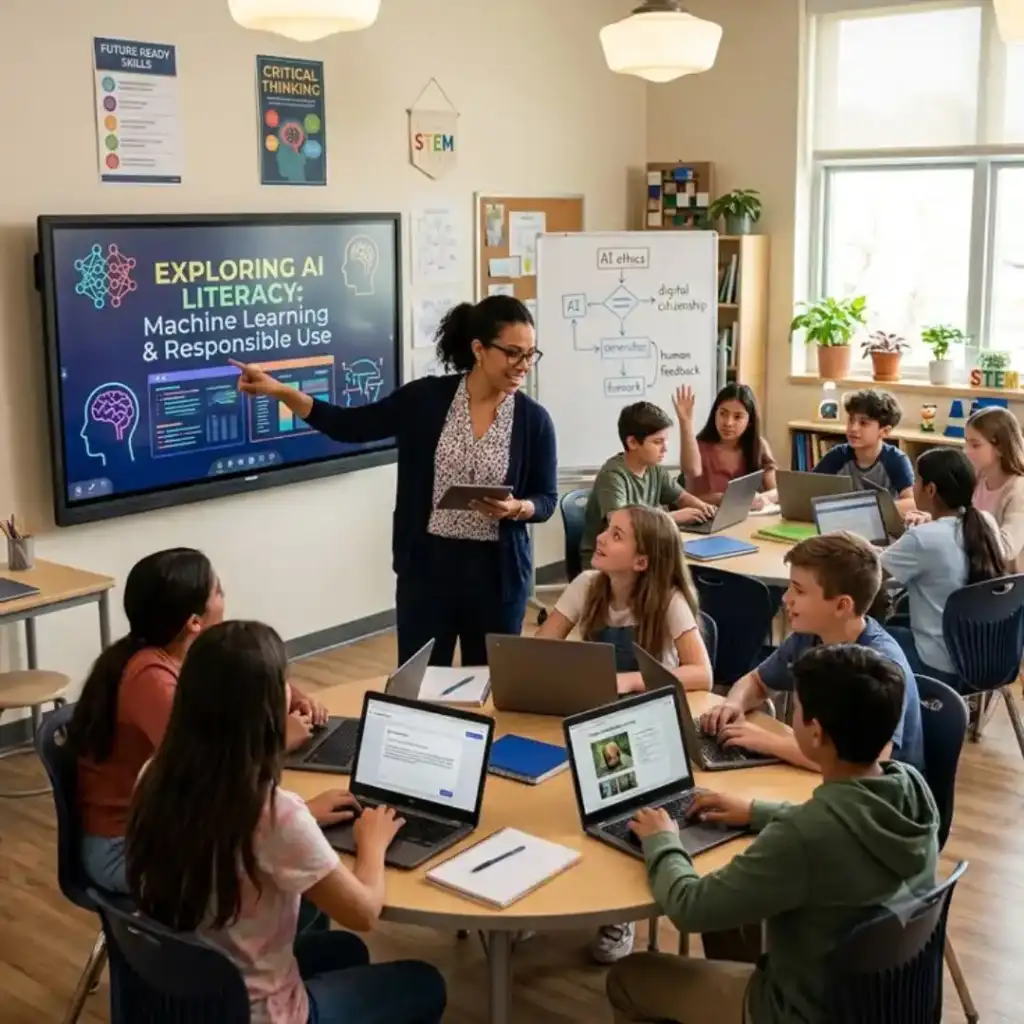
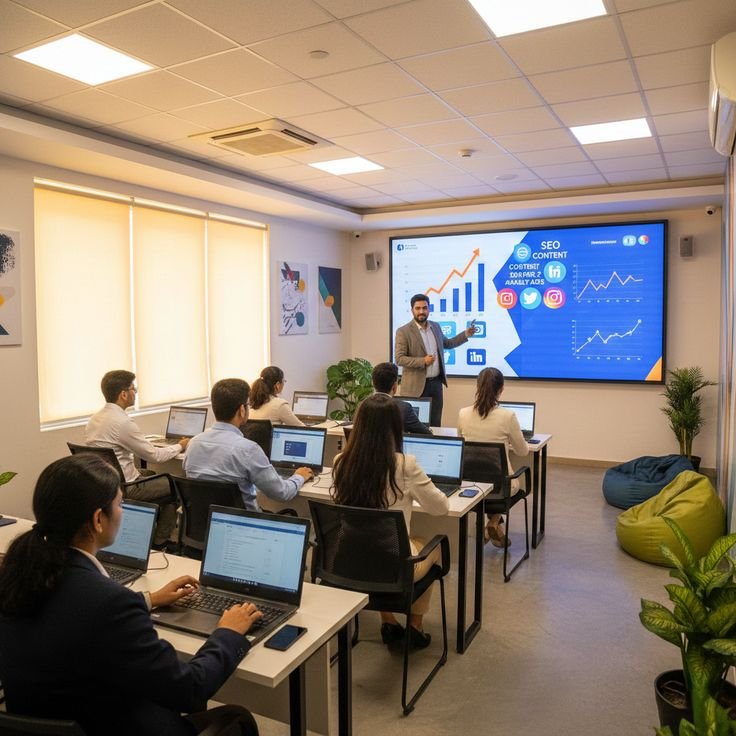
Walk through the corridors of any forward-thinking school in Noida today, and the chalk dust is quietly disappearing. In its place: bright, responsive panels where teachers annotate live, students collaborate on-screen, and lessons pull in videos, 3D models, and quizzes without a single textbook flip. Digital Classroom Solutions in Noida empower schools with interactive technology, smart teaching tools, and engaging learning experiences that improve student outcomes. This isn’t a pilot program anymore — it’s fast becoming the standard expectation for parents, boards, and school administrators alike.
For school leadership evaluating smart classroom display solutions in Noida, 2026 marks a turning point. What used to be an optional upgrade — a single interactive panel in one flagship classroom — is now a full-institution decision involving budgets, board compliance (CBSE, ICSE, state boards), teacher training, and long-term maintenance planning. This guide breaks down what a genuine smart classroom setup looks like today, why AI-powered panels are leading the shift, and what administrators should actually evaluate before signing a purchase order.
Noida’s education landscape — from established CBSE schools in Sector 44 to newer institutions along the Greater Noida Expressway — is under real pressure to modernize. A few forces are driving this shift simultaneously:
The result is that “smart classroom” has moved from a marketing line on a school’s brochure to a real infrastructure decision that affects daily teaching quality.
It’s easy to assume a smart classroom is just “a TV on the wall with a stylus.” A properly designed smart classroom setup is really a stack of connected components:
This is the centerpiece — a large-format, multi-touch panel replacing the traditional whiteboard and projector combination. Look for:
ALVision’s Interactive Flat Panels are purpose-built around exactly this spec sheet — 20-point multi-touch, Windows OS integration, wireless screen sharing, and annotation tools designed specifically for classroom use.
This is where 2026’s rollout differs meaningfully from setups installed five years ago. AI smart classroom technology now commonly includes:
A single panel doesn’t make a smart school — the surrounding ecosystem matters just as much:
Traditional whiteboards and even first-generation interactive whiteboards (the kind requiring a separate projector) are steadily being phased out across Noida’s private schools. The reasons administrators cite most often:
A modern interactive whiteboard for schools — built as an all-in-one flat panel rather than a projector-and-board combination — solves all three problems at once, while also cutting long-term maintenance overhead since there are fewer moving parts (no bulbs, no separate projector alignment).
For school administrators, the vendor decision is arguably more important than the spec sheet itself, since EdTech display solutions typically involve a 5+ year usage lifecycle, ongoing maintenance, and eventual scaling to more classrooms. Before signing off on a vendor, it’s worth checking:
This is where ALVision’s positioning becomes particularly relevant for institutional buyers. As one of India’s OEM/ODM manufacturers with an in-house R&D and engineering team, Alvision Digital designs and manufactures its own Interactive Flat Panels rather than white-labelling third-party imports — meaning consistent specs, quality control, and support across every classroom you scale to. Their Smart Classroom Solutions page is built specifically around this institutional buyer journey — from single-classroom pilots to full-campus digital transformation.
If your institution is evaluating digital classroom solutions Noida vendors for the first time, a phased rollout tends to work better than a single big-bang purchase:
Reading a spec sheet only tells half the story — most school administrators make faster, more confident decisions once they’ve seen how a similar institution’s rollout actually looks in practice. View Our Projects to see how ALVision has approached classroom and institutional deployments, and get a clearer sense of what a rollout for your own school could look like.
1. What is a smart classroom, exactly?
A smart classroom replaces the traditional blackboard and projector setup with an interactive flat panel — a large touchscreen display that lets teachers write, show videos, and run digital lessons all from one device. It’s designed to make lessons more visual and more interactive for students, without needing separate hardware for each function.
2. How much does a smart classroom setup cost for a school in Noida?
Costs depend on panel size (usually 65″, 75″, or 86″), the number of classrooms, and whether you’re adding extras like podiums or video conferencing. Most schools start with a pilot in 2-3 classrooms before scaling campus-wide, which also makes budgeting easier. It’s best to get a direct quote based on your classroom count and screen size preference.
3. Are AI features actually useful in a classroom, or just a sales pitch?
Genuinely useful — features like handwriting-to-text conversion, auto-generated quizzes, and smart content suggestions save teachers real prep time and help students revise faster. That said, the AI is only as good as the panel’s underlying hardware, so it’s worth checking processing specs, not just the feature list.
4. What's the difference between an interactive whiteboard and an interactive flat panel?
An interactive whiteboard usually needs a separate projector to display content, which means more maintenance and calibration issues over time. An interactive flat panel is all-in-one — screen, touch, and processing built into a single unit — which is why most schools are shifting toward flat panels like the ones ALVision manufactures.
5. How long does installation take for a full classroom rollout?
A single classroom installation typically takes a day or two once site survey and mounting are done. For larger rollouts across multiple classrooms, timelines depend on classroom count, but most vendors — including ALVision — plan installations around school vacation periods to avoid disrupting ongoing classes.
6. What warranty and support should schools expect from a vendor?
Look for at least a 5-year on-site warranty and 24/7 technical support, since classroom panels see daily, heavy use across the school year. ALVision, for instance, backs its Interactive Flat Panels with a 5-year on-site warranty and pan-India maintenance support, which matters a lot once you’re managing more than a handful of classrooms.
The shift toward smart classroom display solutions in Noida isn’t just a technology upgrade — it’s a decision that shapes how an entire generation of students engages with learning, and how teachers spend their most valuable resource: classroom time. Schools that get this right treat it as an institutional infrastructure decision, not a one-off purchase — evaluating certification, warranty, scalability, and after-sales support just as carefully as screen specs.
If your school is exploring a smart classroom rollout for 2026, it’s worth starting with a partner who manufactures, installs, and supports the entire system end-to-end. View our projects to see how ALVision has helped institutions make this shift, and reach out to discuss what a phased rollout could look like for your campus.